Part One: The Quiet at 2:45 AM
The space beside me was cold. Not the gradual cooling of sheets when someone rises minutes before, but the deep, settled cold of prolonged absence. My hand swept across empty fabric, and before my eyes even opened, I knew something was wrong.
I reached for my phone on the nightstand. The screen burned 2:45 a.m. into my pupils. No note on the pillow. No message on the lockscreen.
The apartment breathed around me. Refrigerator hum. Distant elevator. The rattle of the building’s old pipes somewhere in the walls. Normal sounds for this hour, but wrong without her breathing beside them.
Susan had been out with friends. She’d told me around dinner, already halfway out the door, keys jangling, that she’d be late. “Late” had stretched past midnight, past one, and I’d fallen asleep waiting. But this wasn’t late anymore. This was gone.

I sat up, bare feet finding the cold floor. Through the bedroom doorway, the hall stretched dark. No light from the bathroom. No glow from the living room windows. The kitchen was still.
I grabbed my phone again, typed with one thumb. Hey, you okay? Where are you? Simple. One question. The kind any partner asks when it’s nearly three in the morning and the bed is empty.
I sent it.
Thirty seconds later, my phone exploded.
The screen lit up with her face — that photo from two summers ago, her laughing at the beach, hair wind-whipped, eyes bright. Now it pulsed with an incoming call, and something about the timing, the immediacy, made my stomach tighten before I even answered.
“Are you serious right now, Albert?”
Her voice hit like a slap. Loud, sharp, already furious. No slurring, no sleepy confusion. Wide awake. Pacing somewhere.
“God, you’re so clingy.”
I sat up straighter. “I just woke up and you weren’t here. I wanted to make sure you’re safe.”
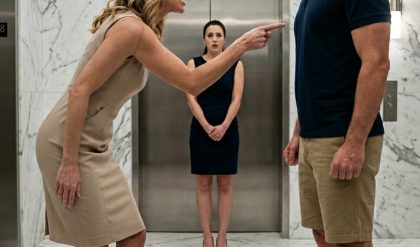
“No, you wanted to control me.” The word landed like she’d been waiting to use it. “You always need to know where I am. You suffocate me. Every time I go out, every single time, there’s a text, a question, a check-in. I can’t breathe, Albert.”
I stared into the dark bedroom. The city lights through the blinds painted stripes across the ceiling. Three years together. Vacations, holidays, her mother’s funeral where I held her while she wept. A year in this apartment, building a home. And this was the response to four words.
“Susan, it’s almost three in the morning. I asked one question.”
“You never trust me.” Her voice pitched higher, cracking at the edges. “You hover. You question everything. Where are you going? Who are you with? When will you be back? I’m not your property. I need space. I can’t breathe with you always watching.”
The word “hover” echoed in my skull. I replayed the last month. The cancelled dinner plans she blamed on migraines. The new perfume she’d started wearing to “girls’ nights.” The way her phone now lived face-down on every surface. I hadn’t hovered. I’d observed. There was a difference.
“Where are you right now?” I asked, voice flat.
“You’re doing it again!” Her laugh was bitter, theatrical. “This is exactly what I’m talking about. You can’t help yourself. You have to know everything. Well, guess what? I’m out. With friends. Living my life. And I don’t owe you a tracking device.”
A man’s voice murmured in the background. Low, brief, then cut off like someone had covered a speaker.
“Who’s that?” I asked.
Silence. Two seconds too long.
“No one. Music. You’re hearing things now too? Great. Just great.”
Then she hung up.
I held the phone until the screen dimmed. The silence of the apartment pressed back in, denser than before. My reflection stared at me from the black glass — a man still half-asleep, jaw slack, eyes processing something his heart hadn’t caught up to.
Three years. One year living here. The lease was in my name. Most of the furniture was mine. Lately, I’d been covering nearly every bill while she drifted through job searches that never seemed to end and late nights that multiplied week by week. The woman who used to split groceries down the middle now let me cover rent without comment.
And I was controlling because I asked where she was at 2:45 in the morning.
Something inside me went quiet.
Not broken. Not shattered. Those words implied violence, drama, mess. This was none of those. This was a door closing without a sound. A circuit switching off. A room in my chest going dark and still, the way a house settles after everyone leaves.
I lay back against the pillow. The ceiling was the same ceiling I’d stared at for months while she slept beside me. Nothing about it had changed. But I had.
For the first time since we started dating, I realized we had crossed a line we wouldn’t step back over. Not couldn’t. Wouldn’t. Because I wouldn’t let us.
That was the moment everything began to change.
I didn’t confront her when she stumbled in just after sunrise.
The door clicked open at 6:47 a.m. I’d been lying awake for hours, cataloguing the ceiling’s every crack, building a map in my mind while the city woke up outside. Her footsteps down the hallway were uneven — one heel probably broken, the other still clicking. She paused outside the bedroom door, and I closed my eyes, evening out my breathing.
She slipped inside.
The smell hit first. Alcohol, thick and sour, but under it, something sharper. A cologne I didn’t recognize. Musky, cheap, clinging to her clothes like smoke from a bar she shouldn’t have been in.
“Long night with the girls,” she whispered, more to herself than me. “You were asleep, right?”
I kept my eyes half-closed and mumbled, “Yeah.”
The lie tasted like nothing. That surprised me. A year ago, even six months ago, I would have felt the weight of it — the deception, the betrayal. Now it just felt like data. Another piece of information to file away.
She climbed into bed without another word. Ten minutes later, she was snoring.
I lay there awake, staring at the wall, cataloguing everything. The smell. The timing. The man’s voice on the phone. The way she’d screamed that I was clingy because I asked if she was safe.
That wasn’t normal frustration. That was someone deflecting. Hard.
Someone who needed me to be the villain so she could be the victim. Someone who had to make my question monstrous because the honest answer would have been monstrous in a different way.
Questions, I realized, only feed a liar. They give her material to twist, openings to exploit. So I stopped asking them.
Instead, I started thinking in straight lines.
Later that morning, she woke up like nothing had happened.
I was already in the kitchen when she padded out, hair tangled, wearing my old college t-shirt. She yawned, stretched, smiled at me like she hadn’t called me a controlling monster six hours earlier.
“Morning, babe.” She kissed my cheek. Coffee scent hadn’t reached her breath yet, but the gesture was automatic, rehearsed.
“Coffee’s fresh,” I said.
“You’re the best.” She poured herself a mug, hummed some pop song I didn’t recognize, and settled onto the couch with her phone.
Her phone buzzed non-stop.
Every few seconds, the screen lit up. She’d glance, type quickly, tilt the screen away when I walked past. Once, a call came through, and she silenced it immediately, thumb jabbing the button like she was killing a bug.
“Who’s that?” I asked, casual, pouring my own coffee.
“Just the girls. Drama from last night.” She rolled her eyes. “You know how they get.”
I nodded, sipped my coffee, said nothing.
The old me would have pressed. The old me would have asked which girls, what drama, why she was tilting her screen like a poker player guarding a hand. But that version of me had died at 2:45 a.m., somewhere between the cold sheets and her screaming voice.
The new me watched. The new me collected information.
I worked from home that day, but not for my job. My actual work — the coding projects, the client calls — I handled on autopilot, half-focused. The rest of my attention went somewhere else.
I opened my bank statements first. The apartment lease, fully in my name. I’d signed it before she moved in, and we’d never gotten around to adding her. At the time, it seemed practical. Now it looked like foresight.
The furniture: I opened old receipts, order confirmations. The bed frame — mine, purchased six months before we met. The dining table — mine, a Craigslist find I’d sanded and refinished myself. The couch she claimed to hate but never wanted replaced — mine. The bookshelves, the desk, the kitchen appliances — all purchased by me, all documented.
The shared expenses: I pulled up months of utility bills, grocery receipts, streaming services. Every single one tied to my accounts, my cards. She contributed cash sometimes, but there was no paper trail connecting her to any of it. Our shared life, on paper, was my life that she happened to occupy.
Then I noticed something I hadn’t paid attention to before.
A credit card statement from a card I rarely used. I kept it for emergencies, and I’d given her the number once, almost a year ago, when her car broke down and I was in meetings all day. “Just in case,” I’d said.
The statement showed charges I didn’t make. Late-night ride services. A hotel bar downtown — the kind of boutique place with cocktails that cost twenty dollars each. Another charge from the same hotel, a week later, this time for a room.
Not a bar tab. A room.
I stared at the screen. The numbers blurred, then sharpened again.
Hotels. Rides. Bars. All on nights she’d claimed were girls’ nights. All on a card I’d forgotten she had access to.
I didn’t feel angry. I didn’t feel sad. I felt done.
Not the explosive done of a slammed door or a shouted argument. The quiet done of a decision already made, a path already chosen, a future already separating from the past like a ship pulling away from the dock.
I opened my phone and started making calls.
My boss, Martin, answered on the second ring.
“Albert? Everything okay? You’re not usually a phone call guy.”
“Mind if I work remotely for a few days? Maybe longer?”
He paused. I could hear him processing — the tone of my voice, the request itself, the fact that I, who never asked for anything, was asking. “Take whatever you need. You sound tired.”
“I appreciate that.”
“Everything okay at home?”
“It will be.” I let the words hang. “Soon.”
Martin was smart enough not to push. “Keep me posted. And Albert? Whatever it is, you’ve got my support. You’re the most reliable guy on my team.”
I thanked him and hung up. The word “reliable” echoed. Susan had called me controlling. Martin called me reliable. Same behavior, different perspective. One saw my consistency as a cage. The other saw it as a foundation.
Next call: Daniel. My oldest friend, the kind who’d helped me move three times, who’d sat with me in a hospital waiting room when my father had his heart attack, who’d never asked for anything in return except honesty.
“I might need your truck soon.”
Silence for a beat. Then: “That bad?”
“Yeah.”
“You say the day, I’ll be there.” Daniel didn’t ask for details. He’d met Susan twice. After the second time, he’d said, quietly, “She seems like a lot.” Now that memory felt like a warning I should have heeded.
“Thanks, man.”
“What are friends for if not schlepping boxes at a moment’s notice?” He chuckled, but it was gentle. “You okay?”
“I will be.”
“That’s the Albert I know.” He hung up.
Last call: Claire, a lawyer a former coworker had recommended for personal issues. I’d saved her number two years ago, never thinking I’d need it. Funny how the cautious part of me, the part Susan called paranoid, had been preparing for this moment all along.
“Claire Hammond’s office.” The receptionist’s voice was crisp.
“My name is Albert Hayes. I was referred by Jenna Park. I need a brief consultation about… a domestic situation.”
“He’s asking about separation, not divorce — no marriage, thank God — and managing the logistics peacefully.”
“Hold please.”
Claire came on the line. Her voice was older, steady, the kind that had talked people through disasters and come out the other side. “Mr. Hayes. Jenna mentioned you might call eventually. She said you were too smart not to see the writing on the wall.”
I almost smiled. Almost. “The writing’s become hard to ignore.”
“Tell me what’s happening. Broad strokes. I don’t need the emotional details unless they’re legally relevant.”
I told her. The apartment in my name. The furniture. The finances. The late nights, the credit card charges, the phone call at 2:45 a.m. I kept it clinical. She liked that. I could hear it in the way her questions sharpened.
“Here’s what you do,” Claire said when I finished. “Secure your documents — birth certificate, passport, financial records. Move your belongings discreetly. Don’t leave anything you’d fight to get back. Cancel shared services, separate accounts, change passwords. If she’s been using your card without permission, document every charge, but we won’t pursue that unless she forces our hand. Keep everything clean. No fights, no drama. The less ammunition you give her, the fewer problems we’ll have.”
“And the lease?”
“Notify the landlord in writing that you won’t be renewing. Give her a reasonable window to make other arrangements. Keep a copy of everything. If she tries to stay past the term, that’s the landlord’s problem, not yours.”
By the end of that day, the plan was set.
No fights. No drama. Just an exit.
By Saturday, the gap between us felt like a canyon.
She’d stayed out again the night before. I’d gone to bed at eleven, knowing she wouldn’t be there when I woke up. And I was right. She slipped into bed around five in the morning, mumbling something about her phone dying and losing track of time. The same cologne, stronger this time. A smear of lipstick that wasn’t the shade she owned.
She passed out instantly, one arm flung across my pillow like a territorial claim.
I watched her for a moment. Not with bitterness. Just clarity.
She wasn’t the woman I met three years ago. That woman had called me at midnight just to hear my voice, had texted me pictures of clouds that looked like animals, had cried at sad commercials and brought soup to my apartment when I had the flu. She’d been spontaneous, yes, but not reckless. Independent, but not secretive. Complicated, but not cruel.
The woman beside me now was a stranger wearing my ex-girlfriend’s face.
At nine, I sent a single text to Daniel. Ready.
He pulled up thirty minutes later with his truck, a battered blue Ford he’d owned since college. He knocked lightly, three soft taps, and when I opened the door, he looked past me. Saw the packed duffel bags. The boxes stacked by the wall. The emptiness where my books used to be.
He just nodded.
No questions. That was Daniel. He understood that some moments didn’t need words.
We moved fast and quiet. I’d done the prep work over the past few days — sorting, packing, labeling — while Susan was out or asleep. Now it was just execution. My clothes. My tools. My laptop. My documents. The furniture I’d owned long before she moved in: the bed frame, the dresser, the dining table, the bookshelves. We carried each piece carefully, silently, down the stairs and into the truck bed.
I left her things untouched. Her piles of clothes on the closet floor. Her makeup crowding the bathroom counter. Her decorations — the faux-distressed signs with generic inspirational quotes, the throw pillows she’d insisted on buying, the faux-fur rug that shed everywhere. Even the couch she said she hated but never wanted replaced.
Daniel paused at the bedroom door. Through the crack, we could see Susan still asleep, breathing heavily, the sheet tangled around her legs. She hadn’t stirred.
“Should we…” he whispered, gesturing vaguely.
I shook my head. “She’ll wake up when she wakes up.”
We finished loading in under an hour.
Before we rolled the last box out, I stepped into the bedroom one more time. Susan’s phone was on the nightstand, face-down. A habit I now understood. I’d already removed my card from her digital wallet, cancelled the emergency credit card, changed every password. The electronic ties were severed. All that remained was physical.
I set a single folded note on the kitchen table. No envelope. No dramatics.
Susan,
This isn’t working. I’m moving out today. The lease ends next month, and the landlord already knows I’m leaving. You can stay until the end of the term. If you need anything clarified, text or email.
Albert
No anger. No insults. Just facts.
In the truck, Daniel cranked the engine and glanced at me. “You good?”
I looked back at the building. The window of our — her — apartment was dark, curtains drawn.
“I will be,” I said.
We pulled away from the curb just as a neighbor walked past with his dog. He gave the truck a curious look. I recognized him — Mr. Hernandez, third floor, always friendly, always walking his aging Labrador. He waved. I waved back.
The life I’d built with Susan faded in the rearview mirror.
I stopped at a phone store on the way out of the city. Changed my number. Deleted Susan from everything — contacts, photos, cloud backups. Blocked her on social accounts, email addresses, anywhere she might reach me.
The kid behind the counter, a teenager with acne and a name tag that read “Aspen,” processed everything without blinking. “Relationship clean break?” he asked, not looking up.
“Something like that.”
“Smart.” He handed me the new phone with its blank contact list. “Fresh start. Good luck, man.”
I wasn’t superstitious, but I took the luck anyway.
By evening, I was on the road to a new city where an old job offer waited. I’d interviewed there a year ago — a smaller company, less pay, but better work-life balance and a team I’d liked immediately. At the time, I’d turned it down. Susan hadn’t wanted to leave the city. She’d said her “opportunities” were here, her “network,” her “plans.” So I’d stayed. For her.
Now I called the hiring manager, a woman named Gail who’d told me back then, “If things change, this door stays open.”
She remembered me immediately. “Albert! It’s been a minute. What can I do for you?”
“If you still want the position, I can start in two weeks.”
She didn’t ask what had changed. She didn’t need to. “The offer was always good. Let me email you the paperwork. We’re thrilled to have you back.”
“Perfect,” I said.
And that was it.
By nightfall, the life I’d built with Susan was behind me.
Part Two: Two Years of Silence
Time doesn’t heal everything. That’s a lie people tell you to make pain bearable. But time does clarify. Distance reveals patterns. Silence lets you hear your own thoughts again.
For two years, I didn’t hear a single word from Susan. Not a call. Not an email. Not a forwarded piece of mail. It was like the universe had finally gone quiet, and in that quiet, I rebuilt myself.
The new city was smaller, greener, slower. My apartment was a one-bedroom on a tree-lined street where neighbors actually knew each other’s names. I worked at the new company, debugging code and leading small teams, and I was good at it. I went to the gym at six every morning. I cooked real meals instead of surviving on takeout. I read books again — actual books, physical paper, the kind Susan used to mock as “old-fashioned.”
I didn’t date for the first year. I wasn’t ready. Not because I was still in love with Susan — that had died somewhere in those early morning hours, maybe even before the phone call — but because I needed to understand what had happened. How I’d let someone gaslight me so thoroughly. How I’d normalized the late nights, the missing money, the sharp words that cut me down to size whenever I asked for basic decency.
Therapy helped. A quiet office with a woman named Dr. Okonkwo, who asked questions I couldn’t dodge and didn’t let me hide behind easy answers. She taught me that “controlling” and “concerned” are different things. That asking where your partner is at 2:45 a.m. isn’t surveillance — it’s what functional people do. That the woman who screamed at me was projecting her guilt so aggressively she had to make me the villain to survive her own narrative.
“Her reaction to your question wasn’t proportionate to the question itself,” Dr. Okonkwo said once, tapping her pen against her notebook. “People who have nothing to hide don’t react like that. They say, ‘Oh, sorry, I lost track of time, I’ll be home soon.’ They don’t scream about control.”
“She called me clingy,” I said. “For months, I believed her.”
“Because you’re a reasonable person. Reasonable people assume other people are also reasonable. It’s not a character flaw. It’s a feature. The trick is learning to recognize when someone exploits that feature.”
I thought about that a lot. Learning to trust without being naive. Caring without losing myself. Loving without accepting mistreatment as the price of admission.
By the second year, I started seeing someone.
Her name was Olivia. We met at a farmer’s market on a Saturday morning — I was buying tomatoes, she was arguing with a cheese vendor about gouda aging techniques. She was a food writer, sharper than anyone I’d ever met, with a laugh that made strangers turn their heads. She wore oversized sweaters and knew the names of every plant in the botanical garden. She had an ex-husband she co-parented a golden retriever with, and she’d done enough therapy to talk about it without flinching.
Nothing about her was loud. Nothing about her was chaotic. She texted when she’d be late. She answered questions without defensiveness. She made space for my boundaries while maintaining her own.
One night, about six months in, she stayed late at work — a restaurant opening that ran long, kitchen tours, interviews with staff. She’d told me in advance, sent me the restaurant’s name and address “just in case,” and texted periodically: Appetizers done, moving to mains. Then: Pastry chef is a genius, you’d love this place. Then: Wrapping up, should be home by 10.
I didn’t once feel anxious. Didn’t check my phone a dozen times. Didn’t spiral into worst-case scenarios.
When she walked through my door at 10:07, cheeks flushed from the cold, carrying a to-go box of dessert, she kissed me and said, “I brought you the chocolate thing. It has sea salt. You’re going to lose your mind.”
“Rough night?” I asked, smiling.
“Exhausting. But good.” She kicked off her shoes and collapsed on the couch. “Tell me about your day. I talked to forty strangers about plating techniques and I need to remember that normal human conversation exists.”
I told her about my day. She listened. She asked questions. She ate half the chocolate thing while I talked, then apologized and offered me the rest.
It was simple. It was steady. It was nothing like the roller coaster I’d ridden with Susan, and for that, I was profoundly grateful.
The dreams stopped somewhere in the second year.
For months after leaving, I’d wake up disoriented, reaching for a body that wasn’t there. Sometimes I’d hear her voice in crowds, sharp and accusatory. Once, at a grocery store, a woman laughed a certain way and my pulse spiked before I could even name why.
But gradually, those reactions faded. The nervous system recalibrates. The brain learns that the danger is gone.
I kept a folder in my home safe — a simple fireproof box my father had given me when I moved into my first apartment. Inside, I stored the documents from that time. The credit card statements. The moving receipts. The email chains. The court-ready evidence I’d never had to use.
I didn’t look at it. I just knew it was there. A record. Proof, in case I ever needed to remind myself that my memory was reliable, that what happened really happened, that I wasn’t the monster she’d painted me to be.
That was enough.
Then one Tuesday afternoon, everything shifted again.
I was at my usual spot — a small coffee shop near the office called The Roost, run by a retired marine who made the best pour-over in the city. I sat in the back corner, the same seat I always took, finishing some reports on my laptop. Afternoon light slanted through the windows. Jazz played softly from the ceiling speakers. Outside, the city hummed with the usual rhythms.
A chair scraped across from me.
I glanced up, expecting a stranger asking to borrow a charger or a barista collecting empties.
“Well,” a familiar voice said, “this is where you disappeared to, Albert.”
My blood went cold.
She looked different. Two years had carved lines around her eyes that hadn’t been there before. Her makeup was heavier, foundation caked in a way that suggested she was trying too hard. Her hair was shorter, blonder, sharper. But the way she carried herself — that old, sharp confidence — was unchanged. She settled into the chair like every room was supposed to rearrange itself around her. Like my coffee shop, my corner, my Tuesday afternoon were hers to occupy.
I closed my laptop slowly. The click of the lid felt louder than it should have.
“How did you find me?”
She scoffed. “You really think you can vanish? A mutual friend mentioned you moved out here. Took some digging, but I figured it out.”
I didn’t bother asking which friend. No point. Whoever it was, they’d been used. They probably didn’t even know it.
Susan leaned forward, elbows on the table. The gesture was familiar — she always did this when she wanted to appear earnest, approachable, the reasonable one. “You left without warning. You made me look insane. Everyone thought I drove you off.”
“I didn’t leave to embarrass you.” My voice was even. Calmer than I felt. “I left because it wasn’t working.”
Her jaw tightened. For a second, the mask slipped, and I saw something raw beneath it. Not guilt. Not remorse. Hunger. Something she wanted and intended to get.
“We need to talk.”
“There’s nothing left to talk about.”
“Yes, there is.” Her voice changed — quieter, heavier. The voice of someone about to deliver a blow and waiting to see how it landed. “You walked out when I was pregnant.”
The words sat on the table between us like a live grenade.
I didn’t react. Not outside, anyway. Inside, I was running calculations — dates, timelines, possibilities. The woman I’d left in that apartment two years ago hadn’t been pregnant. She’d been drunk at 5 a.m., reeking of someone else’s cologne, spending money on hotel rooms with a card that had my name on it. She hadn’t mentioned a pregnancy in any of the calls I’d ignored, any of the emails I’d blocked. No legal notice. No contact through family. Nothing.
“I didn’t know how to tell you.” She looked down at her hands, twisting a ring I didn’t recognize. “I tried to handle it myself. But our daughter, Lily — she deserves to know you. She’s a year and a half.”
A daughter. Named Lily. A year and a half.
I sat back, folding my arms. “If that’s true, why didn’t you reach out? Lawyer. Email. Certified letter. You had options.”
“I was hurt,” she said quickly. Too quickly. Like she’d rehearsed this. “And scared. And you blocked me everywhere. You think that didn’t destroy me? I had no support. I raised her alone while you started a new life.”
Her voice cracked on the last word. It was a good performance. Eighteen months ago, it might have worked on me. But I’d spent two years learning to trust actions over words, and her actions were screaming louder than her tears.
“Susan.” I kept my voice level. “If Lily is my child, we’ll do a test. A proper test, at an accredited lab. If I’m the father, I’ll step up — legally, financially, every way that matters. If I’m not, then this conversation ends today.”
Her eyes narrowed. For a fraction of a second, I saw calculation flash across her face, cold and fast. Then it was gone, replaced by wounded indignation.
“You’ll regret walking out,” she said. “You don’t get to just demand a test like I’m some liar.”
I didn’t answer. I’d heard that line before — a thousand variations of it, all designed to make me question my own judgment.
She stood up, grabbing her bag. “I’ll be in touch.”
She walked out of the coffee shop without looking back. The door chimed. The barista called out a drink order. The jazz played on. Nothing in the world changed except one thing: Susan was back, and she was carrying something that looked like a bomb.
Part Three: The Paternity Test
Three days after the coffee shop, my phone buzzed with a number I didn’t know.
Be at this address Saturday at 2:00. We’re doing the test. Don’t make this harder.
Under the text was the name of a clinic — a tiny walk-in place with a cartoon logo of a smiling stork and a website that looked like it had been built in a weekend. The URL was misspelled. The “About Us” page was lorem ipsum text and stock photos of people who’d never set foot in the building. Reviews online were either five stars with no comments or one-star rants with long, detailed warnings about fake results and cash-only policies.
I called Claire.
“Albert.” Her voice was warm but professional. “I was wondering when I’d hear from you. What’s happened?”
I told her about Susan’s reappearance, the claim of a child, the clinic link. I could hear her typing in the background, probably already pulling up the website.
“Don’t go anywhere near that place,” she said flatly. “It’s a paternity fraud mill. They’ll take her cash, produce whatever result she wants, and you’ll have no legal standing to challenge it. If she’s trying to establish paternity for child support — and I guarantee that’s where this is heading — you need a certified lab with documented chain of custody. Court-admissible results.”
“That’s what I thought.”
“Good instincts. I’ll email you three approved labs in your area. Send her the list. If she refuses, that tells you everything you need to know.”
Ten minutes later, I had the list. Three reputable facilities, each one accredited, each one experienced in legal paternity testing.
I texted Susan: I’m not using that place. Pick one of these three accredited labs.
Her reply came fast, in a barrage:
There you go again, controlling everything.
You haven’t changed.
You owe Lily the truth.
Be a man for once.
I stared at the words. “Be a man.” The same phrase she’d used the night she screamed at me for asking where she was. The same manipulation, two years later, with higher stakes.
I didn’t answer the insults. I sent one final message: Official clinic or no test.
She called five times. I ignored every one. Then, an hour later, a final text: Fine. Third lab. Saturday at 2.
The clinic was clean, professional, and utterly impersonal. Beige walls, plastic chairs, a receptionist who asked for photo ID and had me sign three forms before I even sat down. Exactly what Claire wanted.
I arrived fifteen minutes early. The receptionist handed me paperwork explaining the procedure, the chain of custody requirements, the confidential results delivery. I read every word. This was the kind of place that took paternity seriously because they knew their results could end up in a courtroom.
Susan walked in ten minutes late.
She was holding a small girl by the hand.
Lily.
Behind them, a man followed quietly. He was tall, thin, with a nervous energy that showed in the way he kept adjusting his jacket collar. Susan introduced him as “Jack, my boyfriend,” without further explanation. Jack didn’t meet my eyes. He studied the floor, the ceiling, anything that wasn’t me.
Lily was small for her age. Shy. She clung to Susan’s leg with one hand and had the other pressed against her mouth. Her hair was light brown, wispy, pulled into uneven pigtails. She wore a pink coat that was slightly too big and sneakers that lit up when she shifted her weight.
“This is someone we need to talk to,” Susan said, crouching down. Her voice was sweet — sweeter than I’d ever heard it. Performance voice. “Remember what Mommy told you? We’re going to do a little test. It won’t hurt.”
Lily’s eyes found mine for half a second, then darted away. She pressed harder against Susan’s leg.
The nurse called us back. Her name tag read “Kendra,” and she moved with the practiced calm of someone who’d handled a hundred tense family situations before this one. She explained the swab — quick, painless, just a cotton tip inside the cheek — and looked at Lily with gentle eyes.
“Hi, sweetheart. Can you open your mouth like a little bird?”
Lily started crying.
Not fussing. Not whining. Real crying — the kind that comes from genuine fear. Her small body shook. She buried her face in Susan’s coat and wailed, a raw, desperate sound that echoed off the sterile walls.
“Lily, stop it.” Susan’s voice sharpened, the sweetness evaporating. “Open your mouth. Right now.”
The girl cried harder.
“I said stop.” Susan grabbed Lily’s chin, not roughly but firmly, and tried to turn her face toward the nurse. “You’re making this worse. Just do what I say.”
Jack winced but said nothing. He stared at a poster on the wall about immunization schedules.
Kendra, to her credit, intervened gently. “It’s okay. We can wait. There’s no rush. Sometimes it helps if the child sees an adult go first.” She looked at me. “Would you be willing?”
I nodded, sat down, and opened my mouth. The swab took three seconds. Lily watched through tear-blurred eyes, her crying subsiding to hiccups. When Kendra turned back to her with a fresh swab, she hesitated, then opened her mouth just enough.
The sample was taken. I signed the custody forms. Susan signed hers, her signature a sharp, jagged scrawl. Jack signed as a witness, his hand trembling slightly. Kendra sealed everything in an evidence envelope and explained that results would be emailed within three business days.
Outside in the parking lot, the afternoon sun felt too bright after the clinic’s fluorescent dimness. Susan was waiting by a battered sedan, Lily already strapped into a car seat in the back. Jack hovered near the driver’s door, looking like he wanted to be anywhere else.
“When this proves you’re the father,” Susan said, her voice low and hard, “you’re going to pay for the last year and a half. I’m done struggling alone.”
I met her eyes. “If the test says she’s mine, I’ll take responsibility. Legally. Not through threats.”
Her lip curled. “You think you’re so above everything. Mr. Calm. Mr. In Control. Let’s see how calm you are when a judge orders you to pay.”
She got in the car. Jack started the engine. As they pulled away, I saw Lily’s small face in the rear window, still blotchy from crying, staring at me with an expression I couldn’t read.
I stood in the parking lot for a long moment after they left. The clinic’s automatic doors slid open and shut behind me. Somewhere, a bird sang. A normal sound, on a normal afternoon, in a world that had suddenly tilted sideways.
Three days later, the email arrived.
I was at my desk, working through a code review, when the notification popped up. The subject line was simple: *Paternity Test Results — File #44792-G*. The sender was the clinic’s secure portal.
I opened the email. Read the result twice. Then a third time, just to be sure.
Probability of Paternity: 0%.
Lily was not my child.
The relief came first — a wave so intense my hands actually shook. Then, unexpectedly, sadness. Not for myself. Not for Susan. For Lily. A little girl who’d cried in a clinic while her mother snapped at her, who was being used as a chess piece in a game she couldn’t possibly understand.
I forwarded the results to Susan. No message. No explanation. Just the truth she’d claimed to want.
Then I called Claire.
“Zero percent,” she said. “Of course it is. She was never pregnant when you left, was she?”
“I don’t know when she got pregnant. I only know it wasn’t with me.”
“I’m going to tell you something, Albert, and I want you to hear it clearly.” Claire’s voice was serious. “She’s not going to let this go. She’s spent two years building a narrative where you’re the villain. A DNA test won’t change that. If anything, it’ll make her more desperate. Desperate people do stupid things. Keep the documents. Record everything. And be careful.”
Part Four: The Lawsuit
The moment Susan received the results, my phone lit up with calls from numbers I’d never seen before.
I picked up once. Just to hear what she’d say.
“You paid them off.” Her voice stabbed through the speaker, high and ragged. “You think I’m stupid? That test is wrong. You rigged it somehow.”
“It’s a certified clinic,” I said. “The result stands.”
“You’re not getting away again.” The words came through clenched teeth. “You don’t get to walk out, ignore your child, and pretend you’re the victim. I will make sure everyone knows what you are.”
The line cut.
I blocked every new number as it came in. For a week, silence returned. I almost convinced myself it was over, that she’d finally realized the game was up.
Then, on a Thursday morning, a process server showed up at my office.
“Are you Albert Hayes?”
I nodded, already knowing what was coming.
He handed me a thick envelope. “You’ve been served.”
The lawsuit claimed emotional damages, financial hardship, and abandonment during pregnancy. It demanded compensation for therapy, missed work, relocation costs, and “pain caused by the defendant’s calculated disappearance.” The number at the bottom made my eyes widen.
Susan was suing me for everything.
Claire’s office was decorated in shades of gray and navy, professional without being cold. She had the paperwork spread across her desk like a battle map.
“This is weak,” she said, tapping one of the pages. “No legal documentation of pregnancy during the time you were together. No medical records attached. No correspondence attempting to inform you of the child. She’s relying entirely on emotional testimony and hoping sympathy carries the day.”
“Will it?”
“With some judges? Maybe. Which is why we’re going to bury her in evidence.” Claire opened a folder. “The paternity results — zero percent, court-admissible. Your bank statements showing you covered the majority of shared expenses. The credit card charges — hotels, bars, ride services — all on nights she claimed she was with friends. The timeline of her escalating accusations versus your documented patience.”
She looked at me over the top of her reading glasses. “She’s built her case on the claim that you were a controlling partner who abandoned a pregnant woman. We’re going to show that you were a reasonable person who left a toxic situation, that she fabricated the pregnancy claim, and that this lawsuit is an extension of a pattern of manipulation.”
“Will that be enough?”
“It should be. But court is never predictable. Be ready for her to perform.”
I was.
The courtroom was smaller than I expected. Wood-paneled, slightly shabby, with fluorescent lights that hummed overhead. The gallery held maybe thirty seats, most of them empty. Daniel sat in the back row, arms crossed, face unreadable. Olivia had wanted to come, but I’d asked her to stay away. This was old history. She didn’t need to witness it.
Susan arrived in a plain dress, hair pulled back, eyes visibly red. She’d either been crying or had done an excellent job of making it look that way. Jack sat behind her, jaw tight, arms crossed. He looked like a man who’d been dragged to something he wanted no part of.
Her lawyer — a narrow-faced man named Gerrard with a theatrical voice — painted a vivid picture for the judge. A manipulative boyfriend who monitored her every move. Who questioned her friendships. Who vanished without warning when she was carrying his child. Who left her to raise a daughter alone while he started a new life in another city.
“He didn’t just leave,” Gerrard said, spreading his arms. “He erased her. Changed his number. Blocked her on every platform. Made it impossible for her to tell him about his own child. And now, when confronted with the consequences, his first instinct is to demand a DNA test, as if the mother of his child is a liar.”
Susan dabbed at her eyes with a tissue. It was a good performance. Even I could admit that.
Then Claire stood up.
“If I may, Your Honor — did Ms. Wright ever attempt to contact my client through legal channels? Email? Certified letter? Any method that leaves a record?”
Gerrard shifted. “No, Your Honor.”
“Did she attempt to confirm paternity through a legitimate clinic, rather than an unaccredited facility with multiple fraud complaints?”
“Objection — “
“Overruled,” the judge said. “Answer the question.”
Gerrard’s jaw tightened. “The defense is mischaracterizing — “
“A simple yes or no, counselor.”
“No.”
Claire nodded, calm as still water. “And did Ms. Wright, at any point during the two years she claims to have been raising my client’s child alone, file for child support through the state, which would have triggered a mandatory paternity test?”
Silence.
“Your Honor,” Claire continued, “the plaintiff’s entire case rests on a pregnancy she never documented, a child who DNA evidence confirms is not my client’s, and a narrative of abandonment that falls apart under the slightest scrutiny. We have bank records. Credit card statements. A timeline. And most crucially, a legally certified paternity result showing zero percent probability.”
She set the documents on the judge’s bench, one by one. The paternity test. The credit card charges. The hotel receipts. The moving receipts showing I’d taken only what belonged to me.
“Ms. Wright wasn’t abandoned. She was left. There’s a difference.”
The judge reviewed the documents in silence. The courtroom held its breath. The fluorescent lights buzzed. Susan’s tissue froze halfway to her eye.
Finally, the judge leaned back.
“Case dismissed.” His voice was flat, final. “Ms. Wright, you will pay the defendant’s legal fees.”
Susan’s face collapsed. The carefully maintained mask crumbled, and underneath was something raw and ugly. “I don’t have that kind of money.”
“That,” the judge said without looking up, “is not his problem.”
Outside the courtroom, she caught up to me in the hallway. Her heels clicked fast and sharp on the linoleum. Her face was blotchy, makeup smeared, eyes furious.
“You ruined my life.” Her voice shook. “You left me with nothing. You think you won?”
I stopped. Turned. Met her eyes for what I knew would be the last time.
“I just stopped letting you use me.”
She froze. Her mouth opened, then closed. Words failed her in a way they never had before.
Then I walked away.
Daniel fell into step beside me as I pushed through the courthouse doors and into the afternoon sun. “That was brutal,” he said quietly. “You okay?”
I took a deep breath. The air tasted like fall — dry leaves, distant woodsmoke, the city winding down. “I think I am.”
“That’s new.”
“Yeah.” I almost smiled. “It is.”
Part Five: What Came After
Susan never paid the court-ordered fees.
Claire told me later, voice tired, that she’d filed for bankruptcy within three months. “Classic pattern,” Claire said. “She’s been spinning in circles since the day you left that apartment. Always fighting the consequences she created. Always looking for someone else to carry them. When you refused, she found Jack. When Jack burned out — and I hear he did — she found someone else. There’s always someone else, until there isn’t.”
Through a mutual acquaintance — the same one who’d apparently mentioned my new city — I heard the rest in fragments over the following months.
After the lawsuit collapsed, Susan moved back to her parents’ house for a while. Then a studio apartment that she lost within six months. She bounced between part-time jobs — retail, reception, a brief stint at a call center — none lasting more than a few weeks. She broke up with Jack after a series of arguments people in their circle still whispered about.
Some said she accused him of not stepping up as a man. Others said he caught her lying about money for the third time. Either way, he was gone.
Lily stayed with Susan’s mother most days. That was the part that stuck with me — the little girl with the wispy pigtails and the light-up sneakers, caught in the chaos of a mother who saw everyone as either a resource to extract or an enemy to destroy. People said Lily was sweet, quiet, brighter than the circumstances she’d been born into.
None of that was her fault.
I thought about her sometimes. The way she’d cried at the clinic. The way she’d buried her face in Susan’s coat like she was trying to disappear. The way Jack had stared at a poster while she sobbed, doing nothing.
Children don’t choose their parents. They just survive them.
What bothered me most wasn’t Susan’s version of the story. It was how confidently she told it.
I heard snippets through the grapevine over the months that followed. In her retelling, I was the man who’d vanished when she was expecting. Who’d destroyed her mentally and financially. Who’d left her to raise a child alone, then humiliated her in court with expensive lawyers and falsified evidence.
She left out the part where Lily wasn’t mine. She left out the test, the clinic, the lies. She left out the credit card charges, the hotel rooms, the cologne-scented early mornings. In her version, she was the victim and I was the monster. It was clean. Simple. Believable, if you didn’t know the truth.
I never corrected anyone.
I didn’t need to. The documents were enough. The lab results, the court dismissal, the statements that showed exactly what had happened — I kept them all in a folder inside my home safe. Sometimes, late at night, I’d open the safe and look at the folder. Not because I doubted myself anymore. Because I wanted to remember what I’d survived.
And because I wanted to never forget the lesson Susan taught me.
My own life stayed quiet.
I kept my phone number private. I stayed off social media, except for a small account with a handful of people I actually trusted. I worked, trained, went home. No drama. No chaos. The kind of life Susan would have called “boring.” I called it “peaceful.”
Olivia and I grew closer. After the court case, I’d told her the whole story — not just the broad strokes, but the details. The phone call at 2:45 a.m. The credit card charges. The hotel rooms. The paternity fraud. The lawsuit. All of it.
She’d listened without interrupting. When I finished, she was quiet for a long moment. Then she said, “You know what I hear in that story?”
“What?”
“Someone who survived something awful and didn’t let it make him cruel.” She’d taken my hand. “That’s rarer than you think.”
We’d been together over a year now. Calm. Steady. Kind. Nothing loud, nothing chaotic. When she stayed late at work, she texted. When I asked where she was, she answered. She never called me clingy. She never told me I was suffocating her.
One night, at 2:30 a.m., my phone buzzed.
The sound jolted me awake. For a second, I was back in that apartment, reaching for cold sheets, staring at a screen that was about to change everything.
But it was Olivia.
Wrapping up with the team. Got a ride home. Be there soon. Love you.
I put the phone down and stared into the dark.
The bedroom was quiet. The building hummed around me. Outside, the city glowed with the muted light of a thousand distant windows. The space beside me was warm because Olivia had slept here the night before and would sleep here again tomorrow.
I thought about that night years ago. The cold sheets. The phone call. Her voice, screaming that I was clingy for asking the same question Olivia had just answered without being asked.
I understood it now. Fully. Completely. In a way I hadn’t been able to understand back then.
I wasn’t controlling. I wasn’t clingy. I wasn’t suffocating her.
She was hiding.
And when she demanded space, when she screamed that she couldn’t breathe with me watching — I finally gave her exactly what she’d asked for.
Permanently.
The difference was, Olivia never needed to demand space. Because Olivia had nothing to hide.
I rolled over and closed my eyes. The future stretched ahead — quiet, steady, full of ordinary moments that Susan would have called boring. But I’d learned something in the years since I’d walked out of that apartment with Daniel and his truck and my life packed into boxes.
Peace isn’t boring. Peace is the point.
And I’d found it.
THE END